The Smartest Parking Apps for Drivers Who Need Accessible Parking in America's Busiest Cities
Finding parking in downtown Chicago, New York, Los Angeles, or San Francisco is frustrating for almost everyone. For drivers who rely on disability placards, the challenge is even greater.
The problem isn't simply locating a parking facility. It's finding parking that is genuinely accessible, close to the destination, legally compliant, and available when needed. Unfortunately, most parking apps still do not provide citywide real-time occupancy information for individual ADA-accessible spaces.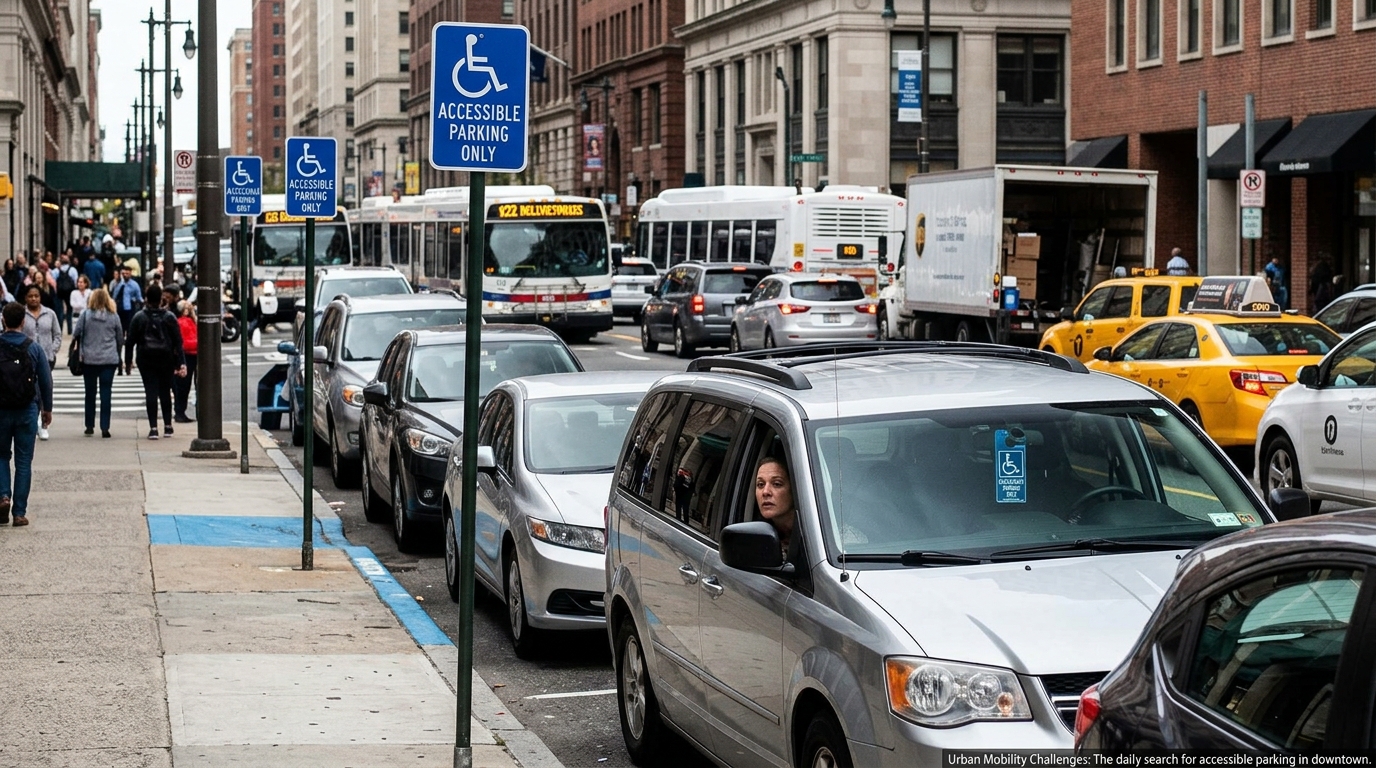
To identify the most useful tools currently available, several parking and accessibility apps were evaluated based on four criteria:
Ability to locate accessible parking options
Quality of parking availability information
Coverage in major U.S. cities
Overall usefulness for drivers with mobility needs
The following apps delivered the most practical results during testing.
SpotHero (iOS & Android)
The Reality Check: What Actually Works?
SpotHero is not an ADA-specific app, but it was consistently the most useful parking tool during testing.
Its biggest advantage is the ability to reserve parking in advance at thousands of garages and lots across major U.S. cities. Rather than circling blocks hoping to find an accessible space, users can often secure parking before leaving home. SpotHero also supports filtering and identifying facilities that offer accessibility features, including wheelchair-accessible parking at many locations.
For travelers visiting hospitals, sporting venues, theaters, or downtown business districts, reservation-based parking often proved more reliable than hunting for street spaces.
Pros
Large nationwide parking inventory
Advance reservations reduce uncertainty
Strong coverage in major cities
Free app
Cons
Does not provide real-time occupancy of individual ADA spaces
Accessibility information varies by operator
Some facilities require additional verification before arrival
Pricing
Free app. Users pay only for parking reservations.
ParkMobile (iOS & Android)
The Reality Check: What Actually Works?
ParkMobile is one of the most widely used parking-payment platforms in North America.
While its primary purpose is paying for street parking and garage parking, it also helps users identify participating parking facilities and reserve parking in many markets. During testing, it proved especially useful in cities where accessible parking is available inside municipal garages that use ParkMobile for payment and management.
The app does not track accessible-space occupancy, but it simplifies parking management once an appropriate facility has been located.
Pros
Extremely broad city coverage
Easy mobile payment experience
Reservation options in some markets
Free app
Cons
Limited disability-specific features
Accessibility information depends on facility operators
No real-time ADA-space tracking
Pricing
Free app. Users pay parking fees as needed.
Parking Mobility (iOS & Android)
The Reality Check: What Actually Works?
Parking Mobility serves a very different purpose from traditional parking apps.
Instead of helping drivers reserve spaces, it helps build accessibility data and combat disabled-parking abuse. Users can locate, share, and suggest accessible parking locations while also reporting violations in participating communities. The app includes details about accessible spaces and ramp access information where available.
For drivers who regularly rely on accessible parking, the community-generated location data can be surprisingly valuable.
Pros
Specifically focused on accessible parking
Community-generated parking information
Helps combat parking abuse
Free
Cons
Coverage varies significantly by city
Not a reservation platform
Limited real-time availability information
Pricing
Free.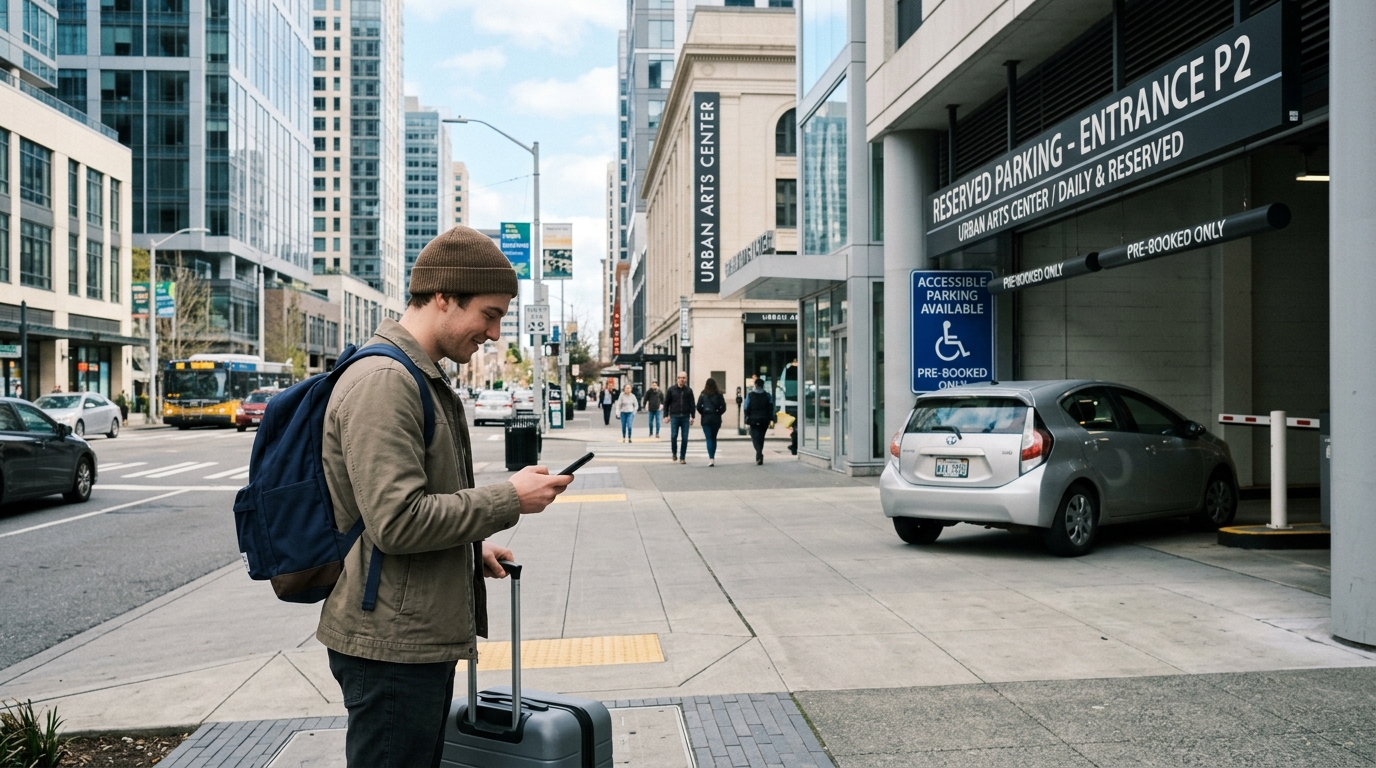
Handiplats (iOS)
The Reality Check: What Actually Works?
Handiplats is one of the few apps built entirely around accessible parking discovery.
The platform maintains a large database of accessible parking locations contributed by users, municipalities, and accessibility organizations. Drivers can search, verify, review, and contribute accessible parking information. The emphasis is on helping users find accessible spaces rather than simply locating generic parking garages.
Coverage is strongest in supported regions and depends heavily on community participation.
Pros
Dedicated accessible-parking focus
Large parking database
User verification system
Accessibility-oriented design
Cons
Subscription required for full access
U.S. coverage is not as comprehensive as mainstream parking apps
Not designed around parking reservations
Pricing
Subscription. Monthly and annual plans are available after a free trial.
ParkingAid (iOS & Android)
The Reality Check: What Actually Works?
ParkingAid takes a different approach by focusing on parking availability and parking-rule interpretation.
Its parking finder helps users identify available parking opportunities while also simplifying complex parking regulations through sign-scanning technology. In dense urban environments where accessible drivers often need to balance proximity with legal parking restrictions, the rule-verification tools proved particularly useful.
While not specifically designed for disability parking, it can reduce the stress associated with finding legal spaces near destinations.
Pros
Real-time parking-finder functionality
Parking-sign scanning tools
Available on both major platforms
Free to download
Cons
Not accessibility-focused
Accessible-space information is limited
Coverage varies by location
Pricing
Free download.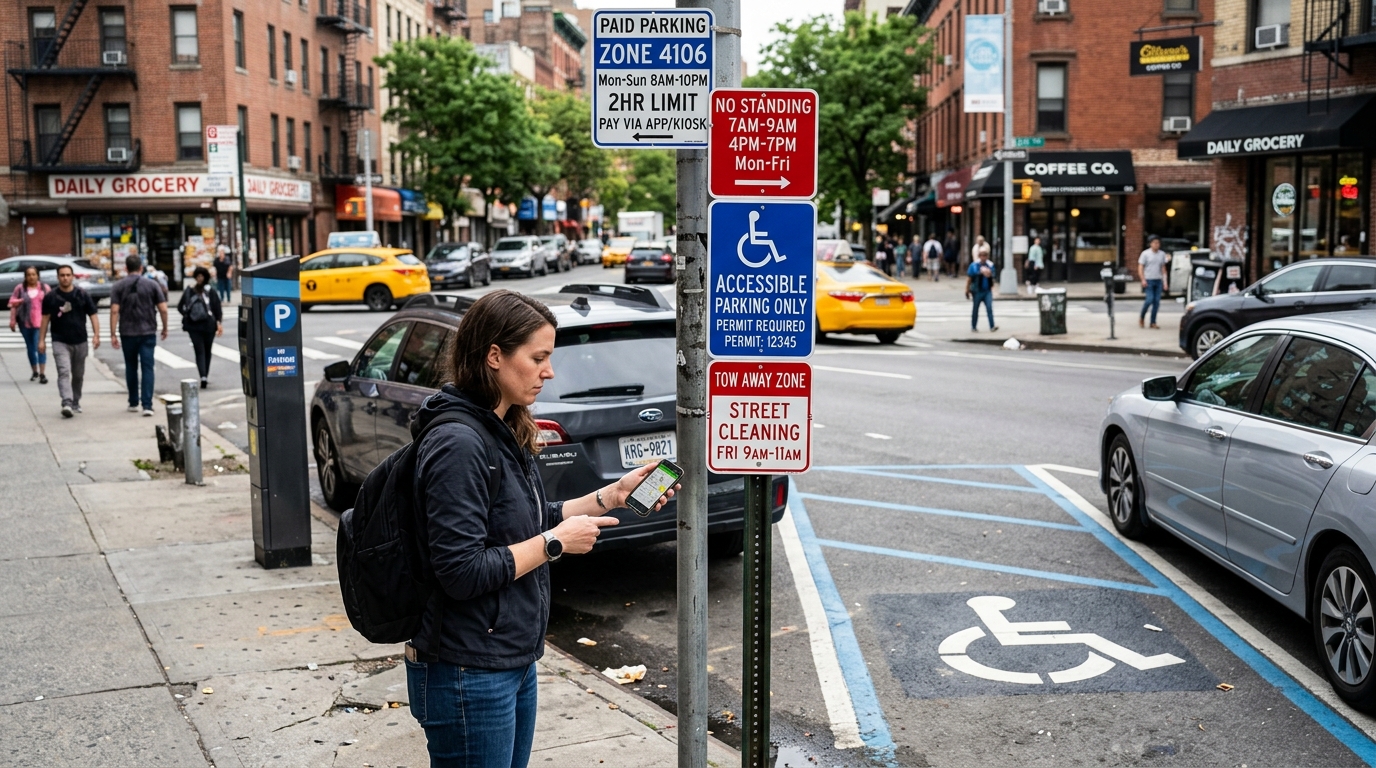
The Final Verdict
For drivers with disability placards, there is currently no nationwide app that reliably provides verified real-time occupancy information for individual ADA-accessible spaces across U.S. cities.
Given today's technology and data availability, the strongest overall option is SpotHero.
Its ability to reserve parking ahead of time significantly reduces uncertainty, particularly in dense downtown areas where accessible parking is limited. For most users, knowing a parking facility is secured before departure is more valuable than relying on chance street-space availability.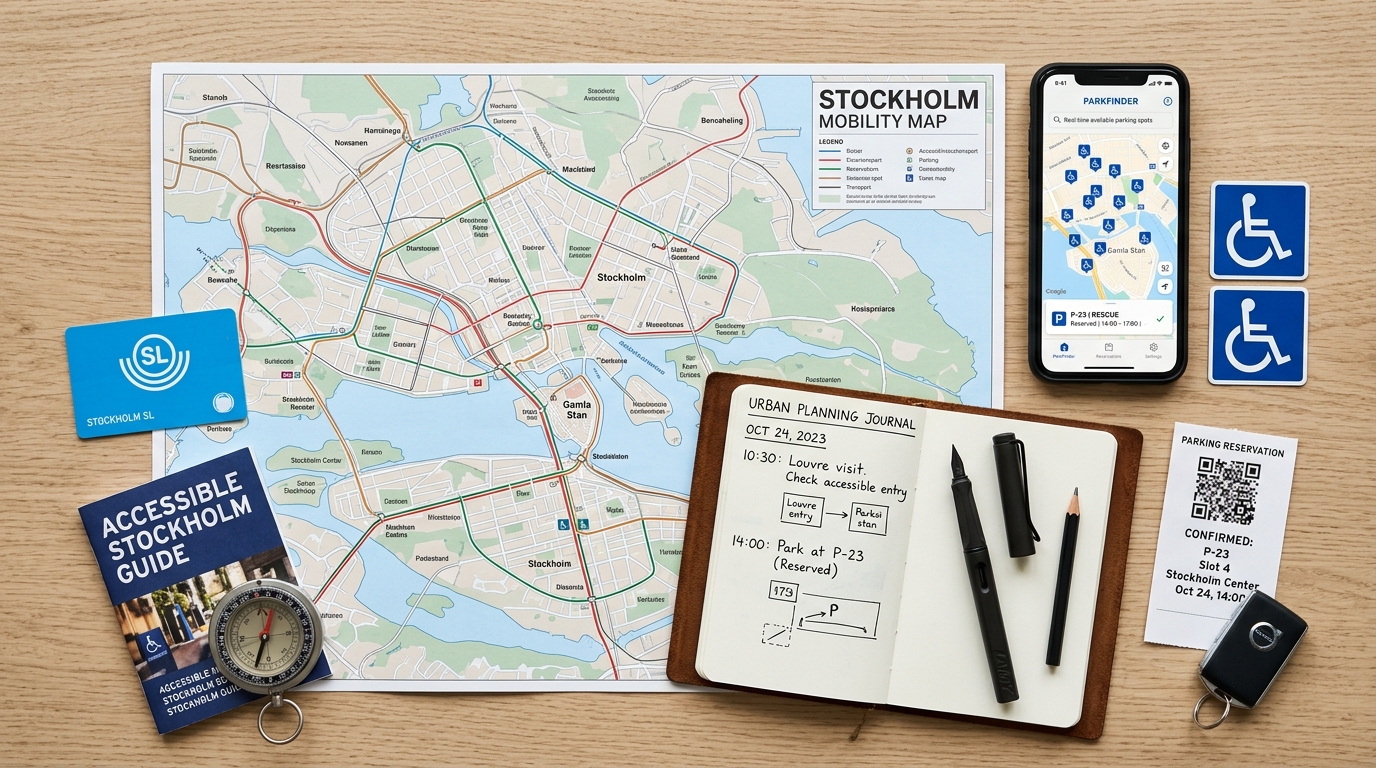
That said, the most effective combination during testing was:
SpotHero for reserving parking near destinations
Parking Mobility for accessibility-specific location information
ParkMobile for managing parking sessions in participating cities
Together, they provide the closest thing currently available to a comprehensive accessible-parking toolkit for urban driving in the United States.
Until municipalities begin sharing real-time occupancy data for accessible spaces at scale, that combination remains the most practical solution for drivers who depend on accessible parking every day.

Health and Wellness
Safe Routes, Bright Streets: 5 Best Apps for Night Running & Cycling in US Cities
Urban athletes no longer prioritize speed alone; personal safety has become a critical variable. Whether navigating a pre-dawn run through downtown Chicago, a late-evening bike ride in Los Angeles, or...

Hobbies and Entertainment