Stop Giving Out Your Real Info: 5 Best Burner Number & Email Alias Apps (2026)
Whether you are selling a couch on Facebook Marketplace, signing up for a software trial, managing a freelance side hustle, or just trying to keep your inbox clean, sharing your primary phone number and email address everywhere is a recipe for endless spam and potential security headaches.
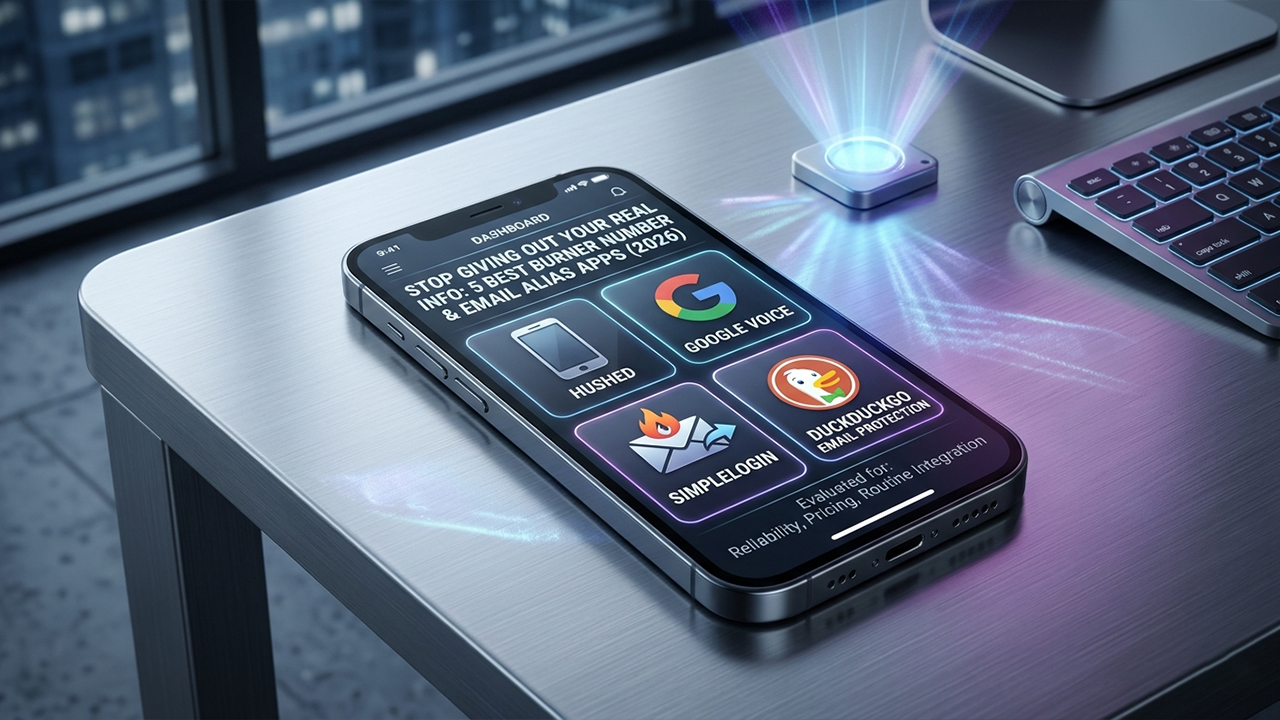
Over the past few years, burner numbers and email alias services have shifted from being niche tools for the ultra-paranoid into practical, everyday essentials. The best options in 2026 aren't sketchy platforms designed for total anonymity—they are mainstream, user-friendly apps built to help you draw a healthy line between your personal life and the rest of the internet.
To find the absolute best options working reliably in the U.S. today, we evaluated them based on cross-platform availability (iOS and Android), reliability of forwarding, pricing transparency, and how easily they fit into a normal daily routine. Here is our definitive shortlist.
1. Hushed: The Ultimate On-Demand Second Line
If you need a secondary phone number without the hassle of a second wireless plan or a physical SIM card, Hushed remains one of the strongest overall contenders.
Operating entirely over Wi-Fi and mobile data, Hushed feels purpose-built for short-to-medium-term projects. Need a temporary U.S. area code for a cross-country move or a month-long Craigslist selling spree? Hushed gives you access to over 300 area codes, allowing you to manage multiple numbers simultaneously from a single, clean dashboard.
The Blueprint: Free to download with flexible, subscription-based monthly or yearly plans handled via in-app purchases.
Why It’s Great: Massive selection of area codes, robust support for both calls and texts, and a rock-solid dual-platform app interface.
The Catch: It requires an ongoing subscription to keep numbers active, it won't support emergency 911 services, and—like all VoIP services—certain strict banking platforms might flag it during 2FA verification.
Ideal For: Freelancers, online sellers, and travelers who need a reliable, high-quality second number that they can dispose of whenever the job is done.
2. Google Voice: The Best Permanent Free Second Line
For users looking for a long-term solution rather than a disposable "burner," Google Voice is still the undisputed king of cost-efficiency.
Unlike apps designed for rotating numbers, Google Voice integrates seamlessly into your life as a permanent second identity. Your calls, texts, and voicemails sync flawlessly across your phone, tablet, and web browser. Plus, Google’s automated voicemail transcription is incredibly accurate.
The Blueprint: Completely free for personal use within the United States (separate paid tiers exist for Google Workspace business users).
Why It’s Great: Unbeatable pricing, excellent call quality, and the stability of the Google ecosystem.
The Catch: You need an existing U.S. phone number to sign up, it’s not ideal if you want to constantly burn and rotate numbers, and some short-code SMS verification systems block it.
Ideal For: Anyone who wants a dedicated, permanent second number for side businesses or loyalty programs without adding a single dollar to their monthly expenses.
3. Burner: The Pioneer of Temporary Numbers
As the app that practically popularized the concept of a "burner number," Burner continues to deliver exactly what its name promises: maximum flexibility and compartmentalization.
What makes Burner stand out is how easily you can spin up a specific number for a single purpose—like a temporary business campaign or a classified ad—and literally "burn" it (delete it) the moment you're done. It treats your communication channels as independent, disposable silos, keeping your real identity completely insulated.
The Blueprint: Offers a free trial, moving into straightforward subscription plans for continued access.
Why It’s Great: Exceptionally intuitive UI, built entirely around the concept of disposable numbers, with great organizational features.
The Catch: Subscription costs can accumulate if you maintain multiple numbers, and it is less economical for long-term, static use.
Ideal For: Short-term projects where you want absolute control over who can reach you, with the option to cut the cord instantly.
4. SimpleLogin: Advanced, Infinite Email Identities
Phone numbers are only half the battle; we hand out our email addresses far more frequently. When it comes to tackling email spam and tracking, SimpleLogin is arguably the most powerful weapon available today.
Instead of giving your real email to every website that demands it, SimpleLogin lets you generate unique aliases on the fly that forward messages straight to your primary inbox. If a specific site starts spamming you—or sells your data—you can toggle that specific alias off with a single tap, killing the spam at the root.
The Blueprint: The generous free tier includes 10 aliases. The Premium upgrade costs roughly $4 a month (or $36 annually) for unlimited aliases and custom domain support.
Why It’s Great: Open-source platform, unparalleled spam control, and seamless integration with custom domains so you can look professional while staying secure.
The Catch: The initial setup can feel slightly technical for casual users, and advanced features require the premium tier.
Ideal For: Power users and privacy enthusiasts who want a completely unique, trackable email identity for every single website they join.
5. DuckDuckGo Email Protection: The Frictionless Privacy Shield
If SimpleLogin sounds a bit too complex for your taste, DuckDuckGo Email Protection offers a beautifully simple alternative.
Rather than acting as a standalone mailbox, this service acts as a transparent shield for your existing inbox (whether you use Gmail, Outlook, Apple Mail, or Proton Mail). When emails pass through DuckDuckGo’s forwarding system, it automatically strips out hidden ad trackers before the message lands in your inbox. You can easily generate @duck.com private aliases whenever you encounter a sketchy web form.
The Blueprint: 100% free to use via DuckDuckGo's browser extensions and mobile apps.
Why It’s Great: Absolutely zero learning curve, zero cost, and highly effective tracker removal without forcing you to change your email provider.
The Catch: It is strictly a forwarding utility rather than a full email manager, meaning it lacks the granular folder and alias control found in SimpleLogin.
Ideal For: Casual users who want instant email privacy and spam reduction without paying for a subscription or changing their daily workflow.
The Verdict: Which Setup Wins in 2026?
You don't have to choose just one of these tools; in fact, the most effective privacy strategy is a hybrid approach. After putting these services head-to-head, we’ve pinpointed the exact scenarios where each one truly shines.
The Gold Standard for Phone Privacy: Hushed While Google Voice is great for a permanent free line, Hushed wins the crown for genuine burner functionality. It strikes the absolute best balance of area code variety, reliable calling/texting infrastructure, and disposable flexibility. When you need a number that can vanish tomorrow without a trace, Hushed is the tool for the job.
The Powerhouse for Email Identity: SimpleLogin If you are someone who creates accounts frequently and wants maximum, granular control over your digital footprint, SimpleLogin is unmatched. Its open-source transparency, custom domain integration, and unlimited alias system make it a heavy-duty shield against tracking.
The Frictionless Free Alternative: DuckDuckGo Email Protection For the casual user who just wants to stop being tracked, DuckDuckGo is impossible to beat on convenience. It costs nothing, requires zero configuration, and quietly strips marketing trackers out of your existing inbox without forcing you to learn a new app.
The Ultimate 2026 Power Combo
If you want a clean, spam-free digital life without changing your primary phone carrier or switching your email provider, the smartest setup is to pair Hushed with SimpleLogin.
By using Hushed to handle market transactions and side-hustle texts, alongside SimpleLogin to deploy a unique email alias for every website you join, you build an incredibly robust barrier. Together, they ensure that your real phone number and primary inbox remain strictly for the people and notifications that actually matter to you.

Health and Wellness
Safe Routes, Bright Streets: 5 Best Apps for Night Running & Cycling in US Cities
Urban athletes no longer prioritize speed alone; personal safety has become a critical variable. Whether navigating a pre-dawn run through downtown Chicago, a late-evening bike ride in Los Angeles, or...



Hobbies and Entertainment